
Proof of funds and proof of wealth packs for exchanges, banks and payment processors
Published: Last reviewed: How we edit
When an exchange, bank or payment processor asks for source of funds, it wants a documented trail from where the money started to the account under review. Source of wealth is the bigger story of how your assets were built. A solid pack is consistent, dated and supported by third-party records. We help you assemble one from real documents. We never invent or alter evidence.
Got a question about your case? Ask us here:
The hard facts about our limits
- No pack can force an exchange, bank or processor to say yes. Their reviewer decides, under their own rules and the law that applies to them.
- We cannot promise a specific outcome or a set timeframe.
- We cannot create, change or backdate any document, and we do not help disguise where funds really came from. If the evidence is not there, we tell you so.
- Your seed phrase, private keys and passwords stay yours. We do not request them, ever.
You should use this service if
- An exchange, bank or processor demanded source of funds and set you a deadline
- Your coins came from mining, early purchases or exchanges that may not exist anymore, and the paperwork behind them is spread everywhere
- A reviewer turned down your first answer because it was incomplete or inconsistent
- A large sum reached you as a gift, an inheritance, or through selling a property or business
- You want to prepare in advance before moving a large amount, so any later review runs smoothly
Common issues
- Early buyer of crypto from exchanges that have since shut down
- Miner earning from rigs, pools and several different wallets
- Frequent trader with activity across multiple exchanges and jurisdictions
- Worker or freelancer paid in crypto, or whose wages went into buying it
- Crypto or cash gifts and inheritances that were later converted
- Money from selling a car, real estate, shares or other assets
- Several sources that need one clear, consistent explanation
How we help
- Pin down what the reviewer actually asks for
We go through the request and split two things apart: source of funds, which is about the specific deposit, and source of wealth, which is about your assets overall. Answering the wrong one often triggers a second request.
- Trace where every amount came from
We track every cent back to its source. This includes salary, sales, mining payouts, or gifts. We detail how the funds moved across exchanges and wallets until they hit the frozen account.
- Tie each claim to a record
Every claim requires a document, like a payslip or bank statement. If a required record is absent, we search for another acceptable alternative to fill the gap.
- Put the story in writing
We write a simple, factual summary that details the money flow chronologically. This narrative names each document and makes sure it doesn't claim anything not supported by the evidence.
- Check for consistency before submitting
We cross-check dates, names, and amounts across your entire submission. Errors and contradictions are the biggest reason claims are denied, so we point them out early.
The steps in this process
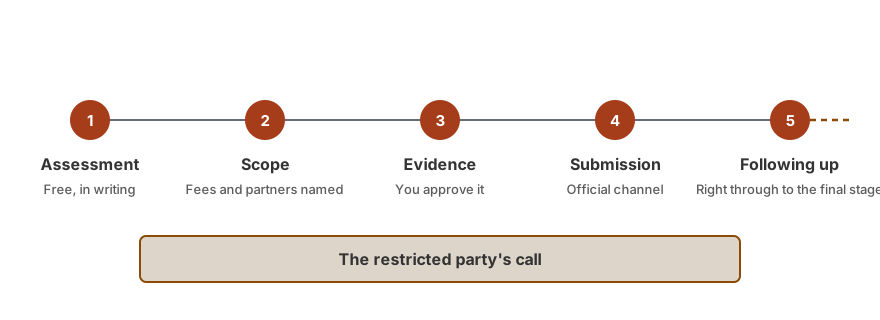
- No-cost evaluation
Give us your request and a brief note about where the money came from. We will respond in writing about the pack's real viability and the records you must locate.
- Scope in writing, with fee
Should we agree to proceed, we will send you the full scope and the fee structure in writing. You never pay until you see these details.
- Gathering your documents
You submit your paperwork through a secure channel. We document what is in your files. We then note what is lacking and what alternative records could work.
- Draft, then check
We put the case together and write the needed explanation. We then review it with you, line by line. We fix conflicts and gaps before final submission.
- Submitting and checking back
You send the file using the official exchange, bank, or processor channel. We help manage follow-up questions and tell you plainly if more information is required.
What you should have ready
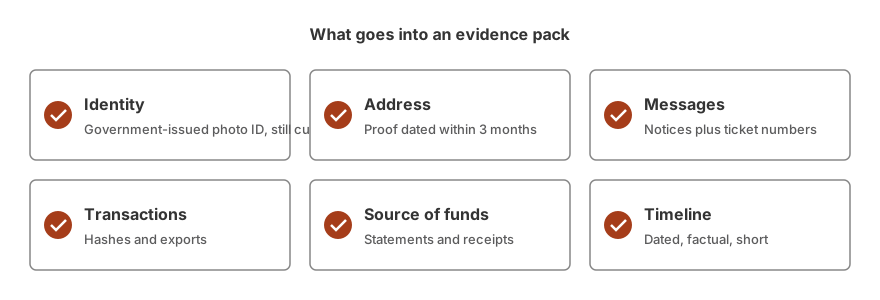
- Government-issued photo ID plus proof of address
- Bank statements that show incoming transfers or purchases.
- Payslips, tax filings, or invoices for the income behind these funds.
- Exchange account exports and trade histories from closed accounts if they are available.
- Statements from mining, pool payout records, and receipts for hardware purchases
- Contracts, deeds, or sale receipts for any assets that were sold.
- Letters or paperwork for gifts or inheritance, including who gave the money
- The wallet addresses you own, plus a short written account of what happened
Time estimates
Collecting records is usually the slow part, above all from old exchanges or abroad. Once the assessment is done we estimate timing, and we warn you early if certain records could take a while to get.
Cost Breakdown
The assessment costs nothing. You then get a written scope and a fee model in writing. No fee is requested before we tell you whether we can take the case. Cost Breakdown →
Real questions
How do source of funds and source of wealth differ?
Source of funds shows where the money behind one transaction or deposit came from. Source of wealth shows how your assets as a whole were built up over the years. A reviewer might want one or both, and both stories need to agree.
What if I bought crypto years back and kept no receipts?
Plenty of early buyers lack full paperwork. That is common, not fatal. Bank statements from the original payment, old exchange emails or export files, the wallet trail on the blockchain, and a plain written timeline can all count as substitutes. Our role is to find what you actually have, then be straight with you about anything that cannot be proven.
If I made money from mining, can I use that as my source?
Usually yes, as long as it is documented. Reviewers want to see pool statements, wallet receipts, records of hardware purchases and, where it applies, income reporting. The hard part is showing a clear line from mining rewards to the funds in question.
Do gifts and inheritances count as source of funds?
Yes, but only if you can show paperwork. Gifts usually call for a signed statement from the giver, their ID, and evidence of how they came by the money. Inheritances need legal records that confirm the estate and the transfer.
What if my story and my paperwork don't match?
Expect a rejection, and possibly a stricter review after that. This is why we check every date and amount before anything goes out. If a detail is wrong, we fix the narrative. We never touch the document.
Is it possible to put a pack together before anyone requests it?
Yes, and it often makes sense before you move a large amount or open a new account. A pack prepared in advance saves days once a request lands. You can keep it current as your activity changes.
Related situations
- Unblocking an exchange account. Decode the freeze, build KYC/AML evidence, answer compliance, file the appeal.
- Blocked crypto cards and payment accounts. Crypto card, neobank, or processor account blocked? Find the cause. Gather documentation. File an appeal.
- Help when sanctions or AML flags hit your funds. AML or sanctions match issues? Get the evidence and a lawyer-filed statement to remove the flag.
- Who froze my crypto? A freeze diagnosis. Name who froze your funds, then see what can realistically be done.
Read next
Everything on this page is general information. It is not legal advice.