
Exchange freeze or law enforcement seizure: telling the two apart
Published: Last reviewed: How we edit
A compliance freeze is the company acting on its own rules. A seizure or legal freeze happens because a court, prosecutor or another authority ordered it. The notice often tells you which one you face: check for a case or order number, the name of an authority, and wording that the platform cannot discuss the case. Each has its own route to release, and a legal order normally requires a lawyer.
Got a question about your case? Ask us here:
Who makes the call
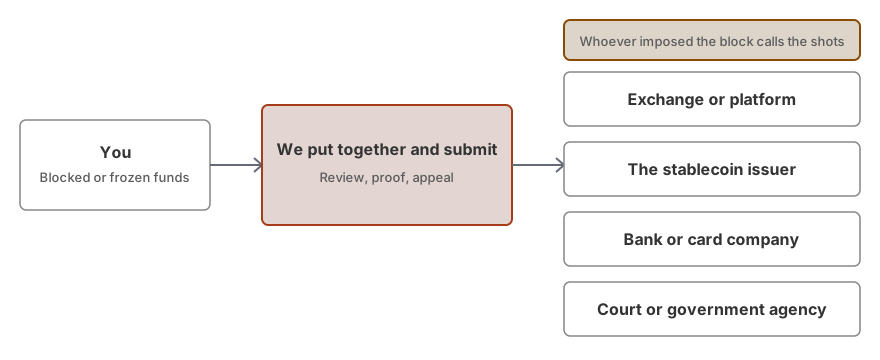
With a compliance freeze, the company decides on its own. It locks the account while reviewing identity, where the funds came from, or a risk flag. With a legal freeze or seizure, an outside authority has decided, and the platform is only following instructions.
On the account screen both look the same: withdrawals are turned off and support replies stay short. What differs is who can remove the block.
Signs worth checking for each type
One clue alone proves nothing. Read the full notice and every reply with care.
- Compliance freeze: the message wants documents from you, talks about a review or verification, and tells you how to reply.
- A legal freeze or seizure notice cites a specific order, case number, authority or request. It says almost nothing else.
- With a compliance freeze, you usually get a clear next step. With a legal one, you often get none, because the platform may not be permitted to explain.
- If support says they cannot comment or cannot see the reason, that usually points to a separate team, or an authority, being involved.
- A letter, email or call from an investigator or authority signals a legal route. Take it seriously and check who actually sent it.
Why this difference matters
A compliance freeze can often be cleared by giving the platform what it asks for. The platform cannot lift a legal order. Sending extra documents to the exchange will not change an order, and it may only delay the right move.
Talking to an authority also has legal consequences. Anything you say or send may end up in a case, so do not improvise your answers.
What each path involves
A compliance freeze needs one thing: paperwork. Reply to the exact request, back up your account of the funds with evidence, and if the first answer comes back as a no, take it up the ladder through the official appeals channel.
If a freeze or seizure is lawful, the route goes through the authority or the court. That usually means tracking down who issued the order, what grounds it rests on, and which procedure lets you challenge it or request release. Deadlines may apply, and they vary by jurisdiction.
When you should get a lawyer
If an order or an investigation is in play, do not wait. Talk to a qualified lawyer in that jurisdiction right away. Someone with legal training can read the order, explain your rights and any deadlines, and deal with the authority for you.
Nobody here hands out legal advice. That is not what this is. What you get is help figuring out which path you are actually on, collecting the evidence, building the file, and a introduction to independent licensed lawyers who can act for you. We cannot lift an order. And we will never ask for your seed phrase, private keys or passwords.
Frequently Asked Questions
Can an exchange tell me that law enforcement caused a freeze?
No, not every time. Certain orders stop the platform from disclosing information. If the exchange tells you it cannot comment, politely ask whether a legal team is reviewing the matter, and get its answer in writing.
If funds were seized, can they ever be released?
Possibly, but only through the proper process, which varies by case and country. Getting funds released typically means showing lawful ownership and going through a formal step with the authority or a court. You will need a lawyer based in that jurisdiction to guide you. Nobody can promise an outcome, and anyone who does is waving a red flag.
Do you need to make contact with authorities personally?
If you are contacted by an authority, seek legal counsel right away. Everything you communicate might become part of the legal record. Before engaging, check if the message is real by finding their official contact details through independent channels.
How do you figure out whether your account freeze is legally mandated or an exchange issue?
Ask the exchange in writing which rule or request the block rests on, and who handles it. Show that reply to a specialist for a free look. We help you read the signals, but the platform makes the call.
How we can help
- Who froze my crypto? A freeze diagnosis. Name who froze your funds, then see what can realistically be done.
- When authorities freeze your crypto. Authorities hold your assets: we coordinate independent licensed lawyers. We give no legal advice.
- Unblocking an exchange account. Decode the freeze, build KYC/AML evidence, answer compliance, file the appeal.
- Filing complaints with regulators and ombudsmen. Build a structured complaint for a regulator, ombudsman or consumer body, with a clear chronology.
Everything on this page is general information. It is not legal advice.