Filing a complaint about a crypto platform with a regulator or ombudsman: getting it ready
Published: Last reviewed: How we edit
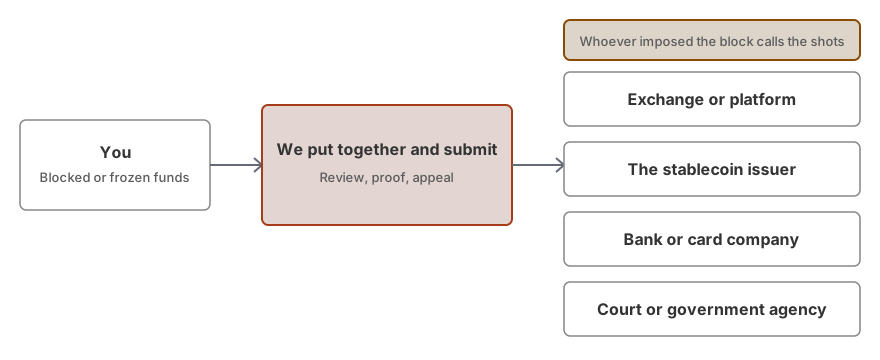
Filing with a financial regulator or an ombudsman can push a platform that keeps ignoring you. It only works if that body exists and covers the platform, which turns on your country and the platform's licence. A strong complaint is short, dated and backed by proof. We help you find the routes that apply, build the timeline and prepare the filing. No one can make a regulator act, and we will not pretend otherwise.
Got a question about your case? Ask us here:
The hard facts about our limits
- Nobody can force a regulator or platform to side with you. They follow their own specific rules and legal powers.
- Plenty of crypto platforms fall outside any complaint body where you live. If that is your situation, we tell you early and we do not promise a result.
- We never threaten platforms, and we never publish accusations we cannot back up with evidence.
- Your seed phrase, private keys and passwords? We never ask for them. Anyone who does is a red flag.
You should use this service if
- The platform stopped answering you and its internal complaints process went nowhere
- You want to find out whether a regulator or ombudsman in your country covers the platform
- You wrote to a regulator already and only got a generic reply, with nothing done
- Before you complain, you need a clean timeline and an evidence pack
Common issues
- Exchange account frozen for months with no written explanation of why
- The platform pushed aside multiple formal complaints filed through its own system
- After closing your account it blocked the withdrawal and gave you no way to appeal
- It is unclear if the platform holds a licence where you live
- Marketing or fee changes that misled you and touched your funds
- A card or payment provider tied to a crypto service rejected your chargeback or dispute
How we help
- See which routes fit your case
We check where you live, where the platform runs and the licence it claims publicly. Then we list the bodies you could use: a financial regulator, an ombudsman, a consumer agency or a payment scheme dispute process.
- Lay out the timeline
Your messages, support tickets and screenshots get sorted into a timeline, each entry dated and numbered. Every event links back to its evidence, so whoever handles the case can read the whole story straight through instead of asking you to explain it again.
- Assemble the evidence pack
We sort your statements, platform notices, terms of service and proof of your complaint into one file. Duplicates and irrelevant material come out, so the filing sticks to the facts that count.
- Write the complaint
We draft a brief, factual complaint. It names the problem, the harm, what you already tried and what outcome you want. Claims we cannot back up get left out, and the format matches what the body requires.
- Bring in a lawyer when needed
When formal legal steps are required, like a claim or a notice before action, we connect you with an independent licensed lawyer. That lawyer answers to you under their own engagement.
The steps in this process
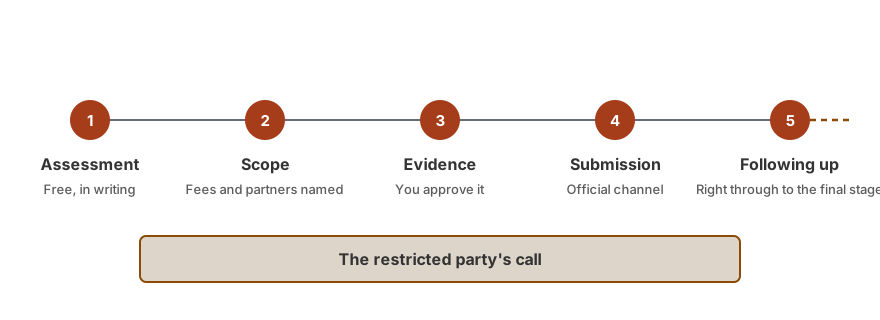
- No-cost evaluation
Send a brief summary plus the platform's name. We reply in writing with which complaint routes seem to exist, how solid your file looks, and whether we can assist.
- Set the scope
You get a written scope and fee model covering the preparation work, plus the independent lawyer if one joins. Saying no costs you nothing.
- Gather and sort evidence
Upload your documents through a secure channel. We then build a chronology and mark any gaps or clashes in dates and amounts before anything goes out.
- Submit the complaint
You read the final version first. We file it using the regulator's official form or mailing address, and you hold on to the confirmation and reference number. No magic happens here: a filing starts a process, nothing more.
- Track and answer
When the case handler asks for something, we help you draft the reply and explain it in plain words. If the body says no, or says it cannot help, we tell you the truth straight, without dressing it up.
What you should have ready
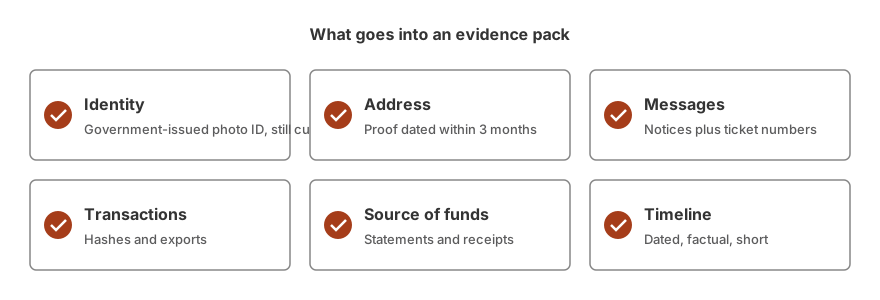
- The platform's name, registered address, plus any licence number it shows publicly
- Your account identifiers and the transaction history covering the period in question
- Every complaint you sent the platform, along with each reply it gave
- The terms of service and fee schedule that were in force back then
- Copies of the on-screen error messages, restriction notices or account warnings, captured as screenshots
- Government-issued photo ID plus proof of address
- Bank or card statements, if a payment provider plays a role in the dispute
Time estimates
Regulators respond at varying speeds, sometimes taking months. Preparation usually happens in days once we have all your documents. We provide an estimate after the assessment and update it as the body replies.
Cost Breakdown
You get a free assessment first. Afterward, we give you a written scope and fee model for the work. We won't ask for a fee until we confirm if we can help. Cost Breakdown →
Real questions
Can you report a crypto exchange to a regulator?
Only sometimes. Jurisdiction and licensing dictate if a regulator will act. Some bodies handle only firms they supervise. Others forward consumer disputes to different agencies. This varies widely depending on your specific location.
What does a financial ombudsman do and does it include crypto?
An ombudsman is an independent group that manages customer disputes with financial firms. Whether crypto platforms are covered depends on your country and the platform's license status. Some bodies cover them, but many do not.
Is the platform's official license status a factor?
Yes. If the platform holds a licence in your country, a regulator or ombudsman there is more likely to have authority over it. An offshore or unlicensed platform often sits outside those routes, and that shrinks your options.
What turns a complaint into one that works?
Clarity wins. Describe the problem in a few sentences, add a timeline with dates, attach proof for every step, and state exactly what you are asking for. Emotional essays and accusations without backing give the platform an easy way to dismiss you.
Do I need to file with the platform before going elsewhere?
In most cases, yes. Regulators and ombudsmen often want to see that you first used the platform's own complaint channel, and they may ask you to show it. Save every message you send and the final answer, even if there is none.
Can a regulator get my funds back for me?
Usually not directly. A regulator might open an investigation or pressure the firm to respond, and an ombudsman can issue a ruling, but neither one can promise your funds come back. We do not promise any outcome either.
Related situations
- Unblocking an exchange account. Decode the freeze, build KYC/AML evidence, answer compliance, file the appeal.
- Help closing accounts and offboarding. Funds stuck after a closure or exit notice? We write the requests and push the escalation.
- Blocked crypto cards and payment accounts. Crypto card, neobank, or processor account blocked? Find the cause. Gather documentation. File an appeal.
- P2P frozen funds: help with documentation. Bank or exchange froze your funds after P2P trading: document the deal, then appeal.
Read next
Everything on this page is general information. It is not legal advice.