Sanctions and AML false positives: how a wrong match happens
Published: Last reviewed: How we edit
A sanctions or AML false positive is an alert that ties you, or your wallet, to a sanctioned person or risky source by mistake. Common causes: a name that looks like the listed one, a matching date of birth, or an address that once touched a flagged service. A reviewer checks your identity data against the entry. If the two do not match, you can request the flag be cleared. We do not assist with evading real sanctions.
Got a question about your case? Ask us here:
A false positive, explained plainly
Banks, exchanges and card companies use software that checks customers and transactions against sanctions lists and risk rules. Here is the hard part: that software is set to flag first and ask questions later. A missed real match costs the company too much, so false alerts happen all the time.
Here is the plain truth: a human reviewer clears most of these alerts. A false positive just means the alert was not really about you. Your account can stay restricted while that review runs, so it feels like an accusation even though it is a routine step.
Why a name or address gets flagged by mistake
A few normal things cause false matches. They happen often and do not reflect on you.
- A name that matches or nearly matches: common names, and the same name spelled differently in another alphabet, can hit a listed person.
- Details that overlap: a shared birth year, nationality or city can push the score up even when you are clearly not the same person.
- Names written in several ways: transliteration can produce duplicate or near-identical entries that trip the screen.
- Your address got flagged: analytics tools tied your wallet to a sanctioned or risky service because funds touched it, even if you had no idea.
- Old data: a list entry or cluster label has changed, but the screening tool keeps showing the stale result.
Telling a false positive apart from a real match
Checking is straightforward in theory. Put your identity details side by side with the listed entry: full name, date of birth, place of birth, nationality, plus any identifiers. When several fields do not line up, that match is weak.
For addresses, the question changes. Did your money actually move to or from the flagged service, and how many hops away was that? A direct connection is a much harder problem than one sitting four or five steps off.
Start by being straight with yourself about the facts. If the listed person really is you, or you knew the other party was sanctioned, this guide does not apply to you. No lawful way exists for anyone to help you work around that.
How to push back on a flag
A short, factual challenge backed by evidence carries the most weight. The person reviewing your case works through a checklist, not through your frustration about the wait.
- Ask the company, in writing, which check triggered the flag and what documents they need from you.
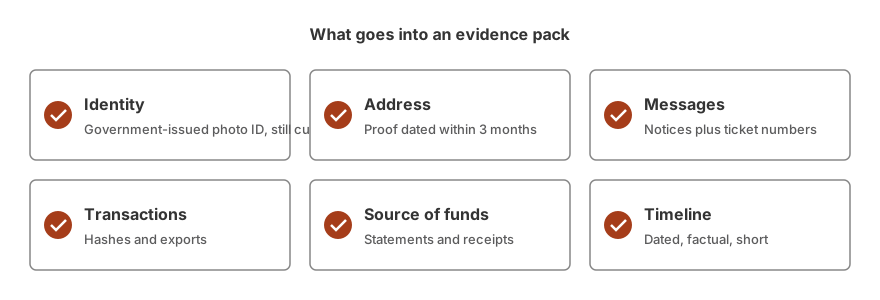
- Send a clear copy of your ID, and where it applies, proof of address and your place of birth.
- In a few sentences, explain why your details differ from the listed entry, and attach evidence.
- If a wallet was flagged, provide the transaction history plus documents showing the source of the funds.
- Save the ticket reference, and use the official channel only for everything you send.
What we handle and what we leave alone
If you were matched by mistake, we help you organise the evidence and draft a clear challenge. Independent specialists go over the transaction trail, and independent licensed lawyers step in where legal advice is needed.
We refuse to help anyone dodge real sanctions, disguise a true match, or route funds around a restriction. No company can be forced by us to remove a flag, and we will never ask for your seed phrase, private keys or passwords.
Frequently Asked Questions
If a sanctions alert appears, does that put me on a sanctions list?
No. An alert only means the software spotted a possible similarity. A human reviewer looks at it next. Plenty of alerts get cleared once the company confirms your name, date of birth and other details do not match the listed entry.
How long does a sanctions review take?
That depends on the company and how complicated the match is. A simple name match can be cleared fast once you hand over documents. Cases with an address history or a regulator request can drag on much longer.
Is it possible to take money out while the alert is still active?
Mostly no. Companies usually freeze withdrawals until the review finishes. Ask which options exist, such as sending funds back to their original source, and do not try to move the money elsewhere in the meantime.
Is it possible to get a sanctions listing lifted through you?
No. Nobody on our side can take you off a list. What we do is help you show a company that the match does not involve you. Getting off an official list is a separate legal matter and requires a lawyer in the right jurisdiction.
How we can help
- Help when sanctions or AML flags hit your funds. AML or sanctions match issues? Get the evidence and a lawyer-filed statement to remove the flag.
- Proof of funds and wealth origin packs. Prepare a clean source of funds and source of wealth pack that exchanges, banks and processors will accept.
- Wallet screening flags and risk disputes. Flagged high risk by screening tools: document the funds path and dispute it.
- Who froze my crypto? A freeze diagnosis. Name who froze your funds, then see what can realistically be done.
Everything on this page is general information. It is not legal advice.